The World Is Watching Guyana. Here Is What 42 People in a Room Told Me About 2026.
Bankers, attorneys, agents, regulators — 42 people sat down in Georgetown to talk honestly about where Guyana real estate is going. Here's what they told me.
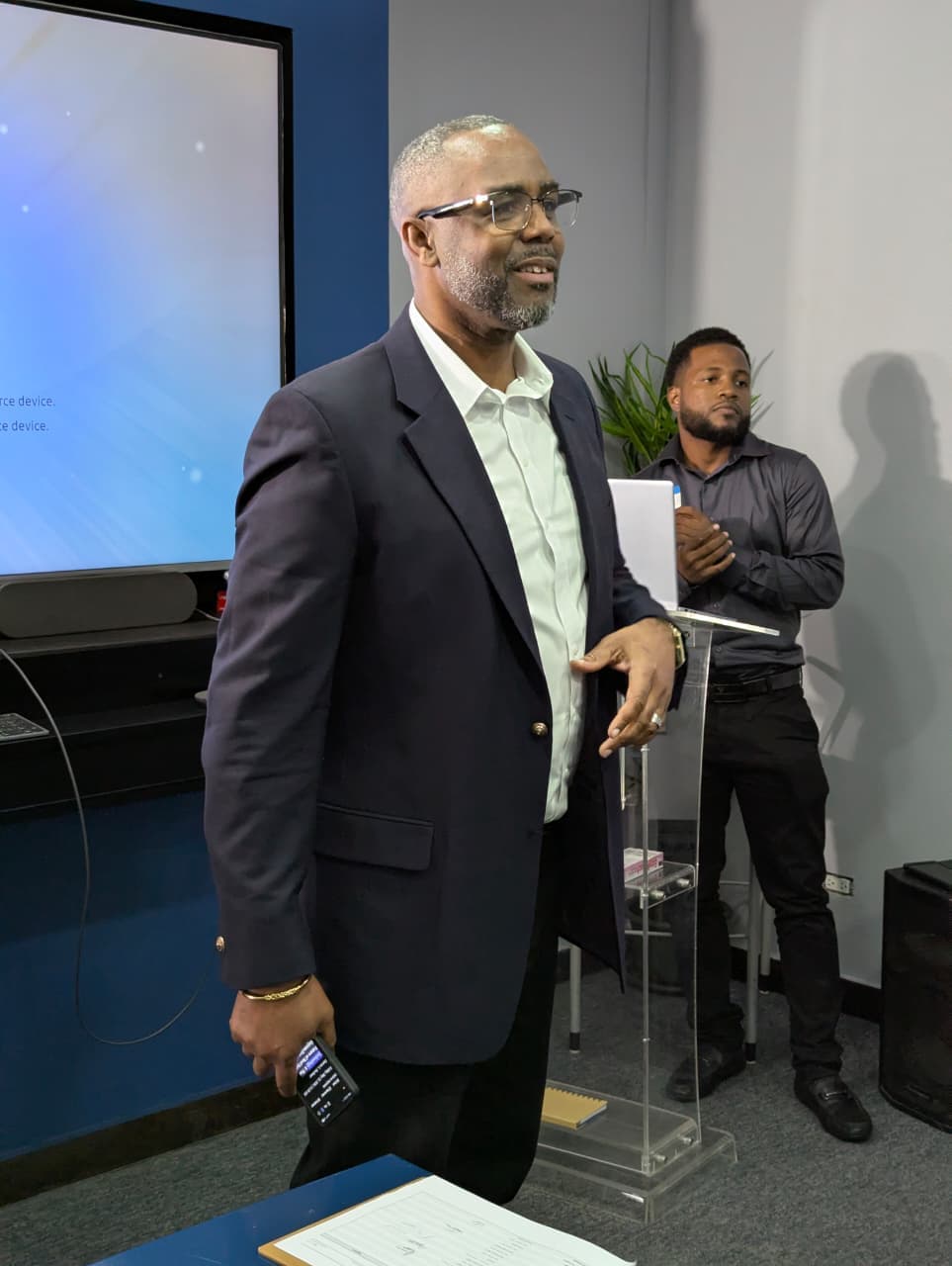
On Friday morning, May 22, 2026, 42 people sat down at the Centre for Local Business Development in Georgetown to talk honestly about where Guyana real estate is going. Bankers. Attorneys. Agents. Government. Buyers. Sellers. People who have been in this industry for twenty years, and people who closed their first deal last month.
The event was called Real Estate Forward: Guyana 2026 & Beyond. It was organized by Sherriann Elcock and pulled together speakers from the Guyana Association of Real Estate Professionals (GAREP), the Guyana Revenue Authority, Republic Bank, GBTI, and the legal community. I sat in that room as a founder and as a listener, and I left with one line stuck in my head.
It came from Nicola Duggan, BSc., Director of GAREP. She said: the world is watching Guyana to see if its growth is managed with integrity.
That is not a soft statement. That is a thesis. And every other thing that happened in that room over the next four hours either supported it or tested it.
Professionalism is no longer optional
Nicola spent her keynote making one argument: an agent's reputation is the agent's brand. Licensing, due diligence, and professional standards are not bureaucratic boxes to tick. They are what determines whether Guyana ends up with a real estate industry investors trust or one they avoid.
This matters because the Guyana market is no longer just local. Oil and gas money is here. Diaspora capital from New York, Toronto, London and Miami is here. Multinational companies are setting up offices and bringing executives who need housing. Every one of those buyers is going to check whether the person selling them a property is licensed, registered, and accountable. If the answer is no, they will not just walk away from one deal. They will walk away from Guyana.
GAREP is not a polite suggestion. It is the industry's first real attempt to create accountability that holds. The agents in that room understood it. The question is whether the rest of the market does.
The government showed up
Representatives from the Guyana Revenue Authority (GRA) spent nearly an hour walking the room through the legal and tax realities of practicing real estate in Guyana. Licensing requirements. Income tax. Withholding tax. VAT obligations. The duty agents have to inform their clients about what they actually owe.
This was not theatre. The GRA was answering specific questions from working agents about how to stay compliant in a market that, until recently, mostly operated on handshakes and WhatsApp screenshots. That the GRA accepted the invitation and showed up to engage publicly is itself a signal: the regulator is paying attention, and the rules are going to be enforced.
For anyone who has been treating real estate in Guyana as an off-the-books side hustle, the message that morning was clear. That window is closing.
The lawyer told some scary stories — and she was right to
Attorney Tiffany Durant gave the room something it needed: real cases. Properties sold by people who did not actually own them. Titles that did not match the land. Buyers who handed over money before any verification happened, and lost it.
Her point was not to scare people away from the market. It was to make sure agents understood that the groundwork — title verification, ownership confirmation, paperwork done properly — is the agent's responsibility, not an optional service. If the agent does not do it, the buyer pays. And when the buyer pays, the agent's reputation, the firm's reputation, and the country's reputation all pay along with them.
This is the integrity Nicola was talking about. It does not live in policy documents. It lives in whether the agent on the ground does the work before the sale, every time.
The banks said mortgages are not as hard as you think
This was the section of the day that surprised me most. Representatives Clinton Robertson from Republic Bank and Saeed Jameil of Guyana Bank for Trade and Industry (GBTI) sat in front of the room and actively debunked the idea that getting a mortgage in Guyana is a brick wall.
Republic Bank walked through a product called Mortgage Move, designed to make it easier for buyers to refinance and for new buyers to acquire property. GBTI laid out the actual process — what is required, what is not, where the real friction is and where it is not. Both banks took heavy questions from the floor and answered them in plain language.
The takeaway: financing is more available than most Guyanese assume, and the banks are actively trying to compete for the business. The bottleneck is not the bank. The bottleneck is information. People do not know what is available, and the agents are not always equipped to explain it.
Closing that information gap is one of the highest-leverage things the industry can do this year.
Technology is closing the chaos gap
I will be brief here because this article is not about my company. But I will say this: for years, the Guyana real estate market has run on WhatsApp groups, Facebook posts, and the same listing being passed between five agents who all think they have the exclusive. Photos get stolen. Properties get duplicated. Buyers get confused. Sellers get frustrated. And serious capital, the kind that could be building this country, hesitates.
We built Guyana HomeHub to solve exactly that problem. A single platform where listings are verified, agents are accountable, and the chaos does not survive contact with the system. As I spoke at the event, Alphius Bookie sat at a laptop behind me adding new listings to the platform live, in front of the room. That is what the operation looks like.
The technology is not the story. The story is that the industry is finally professionalizing fast enough to need it.
Where Guyana goes from here
Sherriann Elcock closed the forum with a line that stayed with me: value your professional time, apply what you learned, and grow together as a compliant industry. That is the whole game.
Guyana has every ingredient to build a serious real estate market: oil revenue, diaspora capital, a young workforce, banks ready to lend, regulators paying attention, and an association in GAREP that is trying to set the bar where it should be. What it does not have, yet, is an industry that consistently operates at the level the moment requires.
The forty-two people in that room are part of how that changes. They showed up. They asked hard questions. They listened to the GRA and the lawyers and the banks. They are the ones who will set the standard for the next forty-two, and the four hundred and twenty after that.
The world is watching. Nicola was right about that. The next twelve months will decide what they end up writing about Guyana.
Darren L. Buckner is the founder of Portal HomeHub and Guyana HomeHub.
guyanahomehub.com | portalhomehub.com
Think we should talk?
Work With Me